
Water Damage Restoration Murfreesboro TN
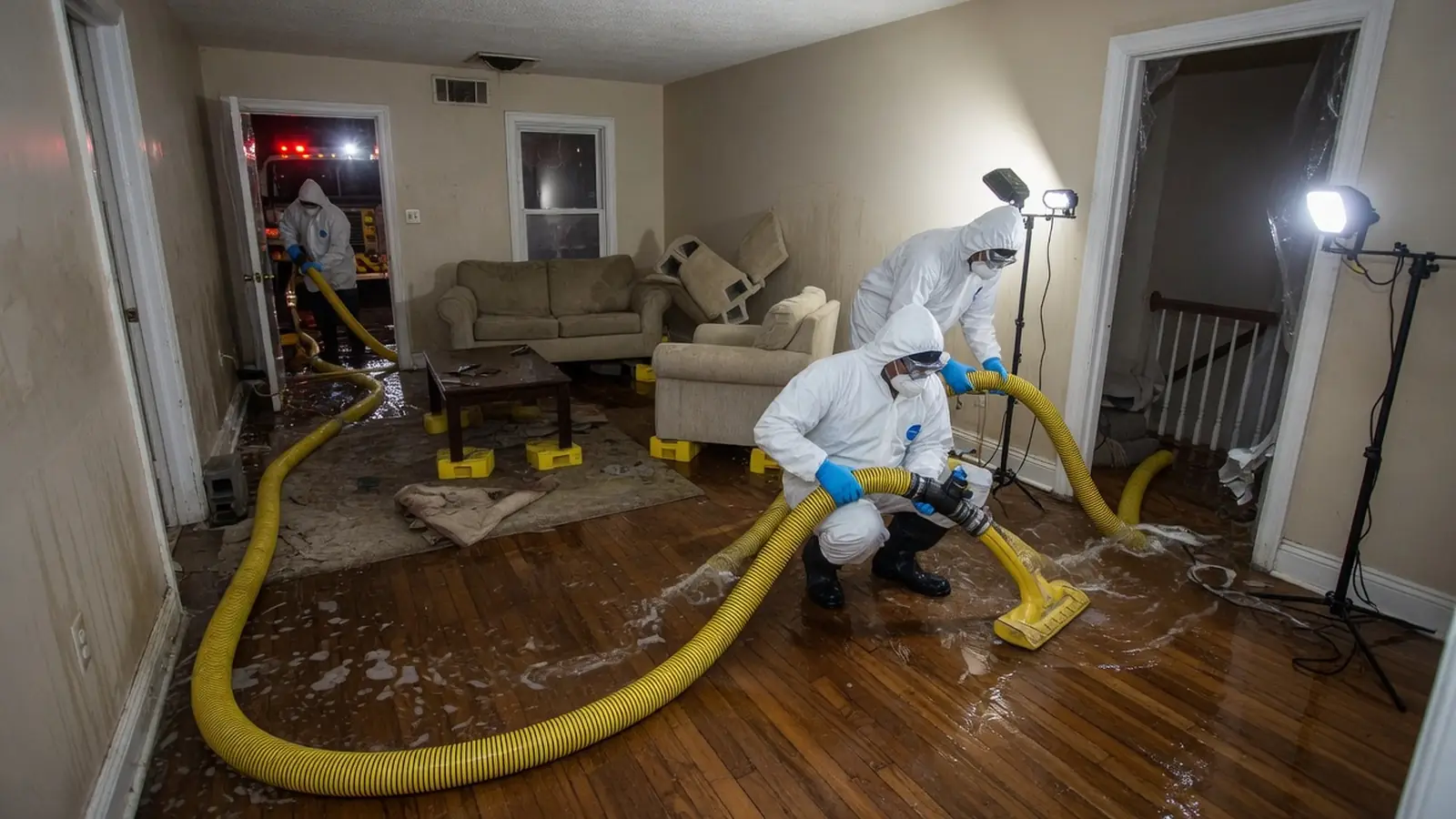
Emergency structural drying requires rapid containment before hidden moisture compromises framing and wall cavities. We deploy industrial extraction equipment and thermal imaging to protect properties across the region. Every project is stabilized with precision moisture mapping to verify complete dryness.
If sewage is coming up a drain right now, call (615) 555-0146.
Precision Drying And Structural Care
About 7% of housing units in the area (4,665 of 63,219) were built before 1960, the era of galvanized steel supply lines and cast iron drains.
About 4% of housing units in the territory (2,810 of 63,219) were built in the 1960s, overlapping the years aluminium branch wiring was installed.
About 19% of housing units locally (12,299 of 63,219) were built in the 1970s and 1980s, overlapping the years polybutylene supply piping was commonly installed.
About 31% of housing units in the region (19,774 of 63,219) were built before 1980, the period when asbestos-containing materials and lead paint were still in use.
When sudden leaks compromise older structural assemblies, our technicians specialize in mitigating sudden exterior storm damage and rapid moisture extraction.
Homeowners often describe how repeated water penetration into crawl spaces during heavy downpours leaves them overwhelmed by choices between exterior yard regrading and interior waterproofing.
Step-by-Step Structural Recovery
A methodical drying sequence ensures structural moisture is safely removed without causing secondary drywall warping or microbial colonization.
- Emergency Tarping And Containment. Unlike indoor pipe breaks, storm mitigation crews must tarp open roof decking and board damaged windows before establishing negative air drying chambers inside the structure. Our initial deployment secures external breach points to stop moisture migration.
- Contaminated Material Removal. Wind-driven rainwater entering damaged roofing or siding is classified as Category 3 water due to outdoor pathogens, requiring aggressive removal of affected porous insulation and drywall. Technicians establish sealed containment zones to prevent airborne contaminants from circulating into unaffected living spaces.
- Vapor Barrier And Moisture Cutoff. A common pattern in trade discussions notes that hardware store plastic tears easily during maintenance; true moisture cutoff requires 12 to 20 mil reinforced polyethylene sealed to foundation walls and piers. We install heavy-duty ground membranes and run desiccant dehumidifiers until wood moisture equivalent falls below safe structural thresholds.
- Psychrometric Monitoring And Verification. Technicians take daily humidity, temperature, and moisture meter readings to track the drying curve throughout structural subfloors and framing. Equipment is adjusted dynamically until building materials reach dry standard baseline targets before containment walls are taken down.
Science-Based Structural Drying
High crawl space humidity and elevated timber moisture leave homeowners questioning whether full vapor barrier encapsulation and commercial dehumidifiers are necessary. Furthermore, high water tables and saturated soils near the Stones River can fully saturate unprotected crawl spaces within days following wet spring conditions. Our standard focuses on managing standing crawl space water using industrial dehumidification and strict moisture logging until all framing reaches equilibrium.
Structural Water Extraction
Our crews remove standing water from hardwood, tile, and carpeted floors using truck-mounted extraction equipment and weighted subfloor rescue mats. We thoroughly map moisture migration behind baseboards and drywall to stop mold colonization early.
Storm And Roof Intrusion Mitigation
NOAA radar recorded 1,532 hail signatures within about 15 miles of the local area between 2021-2025 (2021: 173, 2022: 515, 2023: 139, 2024: 367, 2025: 338). The heaviest recent hail year around the regional radius was 2022, with 515 radar hail signatures inside a 15-mile radius. We secure compromised envelopes swiftly to stop exterior run-off from reaching interior framing.
Crawl Space Moisture Abatement
The dominant mapped soils across the territory (TN149) by acreage are Gladeville-Rock outcrop complex, 2 to 15 percent slopes, extremely stony; Talbott-Barfield-Rock outcrop complex, 2 to 12 percent slopes; Bradyville silt loam, 2 to 5 percent slopes; Talbott silt loam, 2 to 5 percent slopes, eroded. The single most extensive soil unit mapped around the area is Gladeville-Rock outcrop complex, 2 to 15 percent slopes, extremely stony, covering about 93,215 acres of TN149. Rocky terrain causes runoff to pool against foundations during storms.
Restoring Properties With Verified Precision
Our approach centers on scientific psychrometric drying protocols rather than guesswork. Every property undergoes comprehensive thermal mapping, targeted cavity ventilation, and continuous moisture tracking to confirm complete recovery before job sign-off.
- 12Zip Codes Served
- 6Service Areas
- 3Services Offered
Read genuine feedback from property owners who trusted our dryout and mitigation specialists during urgent structural emergencies.
“When pulling baseboards after our kitchen pipe burst, the crew uncovered wet insulation extending into the adjoining pantry wall that we had not noticed. They adjusted the containment barrier immediately and brought in extra drying equipment without making it feel like a crisis. Everything was completely dry and documented before the rebuild started.”
Marcus T.
“Our buyers had a structural closing inspection scheduled in four days when our subfloor showed elevated moisture from an upstairs overflow. The team ran commercial air movers and desiccant units around the clock so our clearance moisture readings passed on schedule. We signed the closing papers without a single delay or penalty.”
Elena R.
“A previous cleanup outfit left damp drywall under our stairs and packed up their fans while timber moisture was still above twenty percent. This company came in, mapped every wet stud with thermal imaging, and stripped away the hidden soaked materials properly. They finally resolved the lingering damp smell that had been bothering our household.”
Devin K.
“Before setting up any extraction machinery, the estimator provided a line-item estimate detailing moisture mapping, equipment placement, and demolition scope. That original breakdown matched the final invoice exactly, with no surprise line items or unexpected fees added at the end. That honest financial transparency made a stressful disaster much easier to navigate.”
Gretchen S.